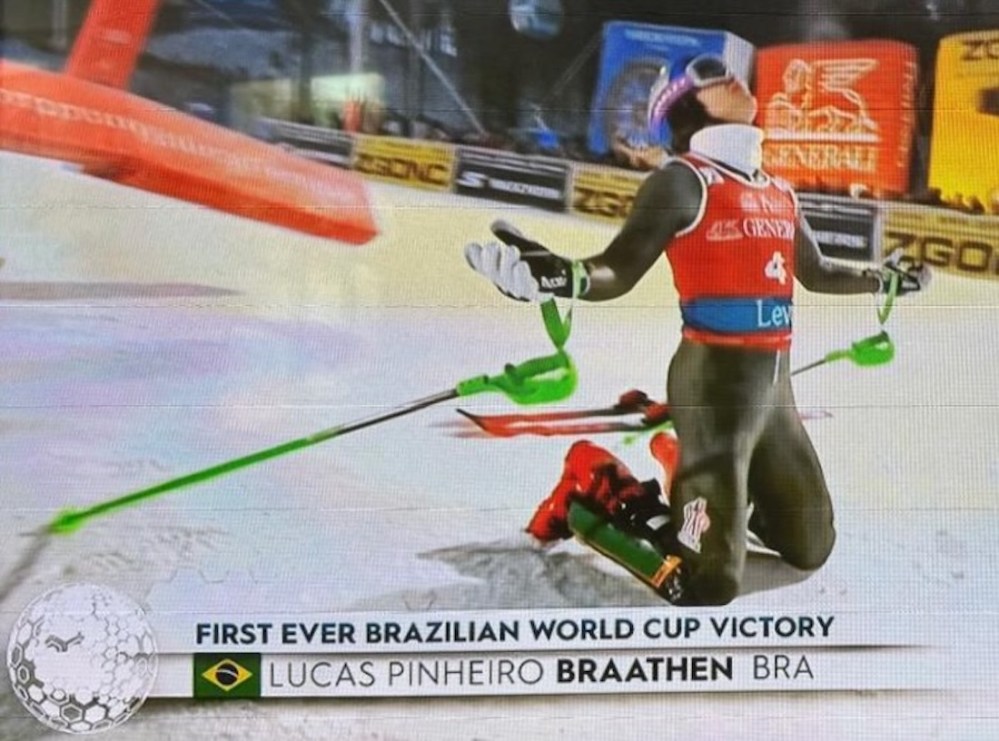
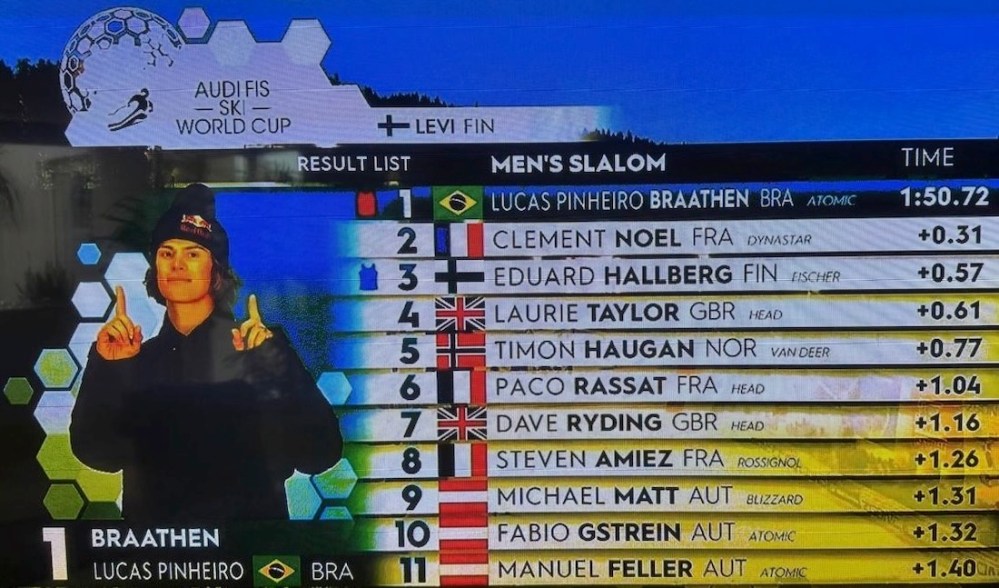
For the first time ever, a Brazilian wins a World Cup event in alpine skiing. It was Lucas Braathen who made the feat in the season’s first competition in Levi, Finland. Here are two images from the exciting turnout:
Lucas Braathen celebrating his first World Cup victory for Brazil in Levi, Finland on 320’2025 (2025-11-16). Image by ESPN. The final result of the World Cup event in slalom. Image by ESPN.
More about Lucas can be found in my blog post 2024-03-31
The month of October, 2025, was the month when I got to learn more about the UAV, unmanned aerial vehicle. What, you say, is that? It is the formal name for what colloquially is named a drone. Then most of you at least know what I am talking about.
I signed up for a course to learn more about drones in São Carlos, state of São Paulo, Brazil. São Carlos is a great university city, with two well known public universities, UFSCar (Federal University of São Carlos) and USP (State University of São Paulo), besides other private ones. It is said to be the city in Brazil that has the highest rate of academic doctors per capita. More about São Carlos can be found in reference #1 below.
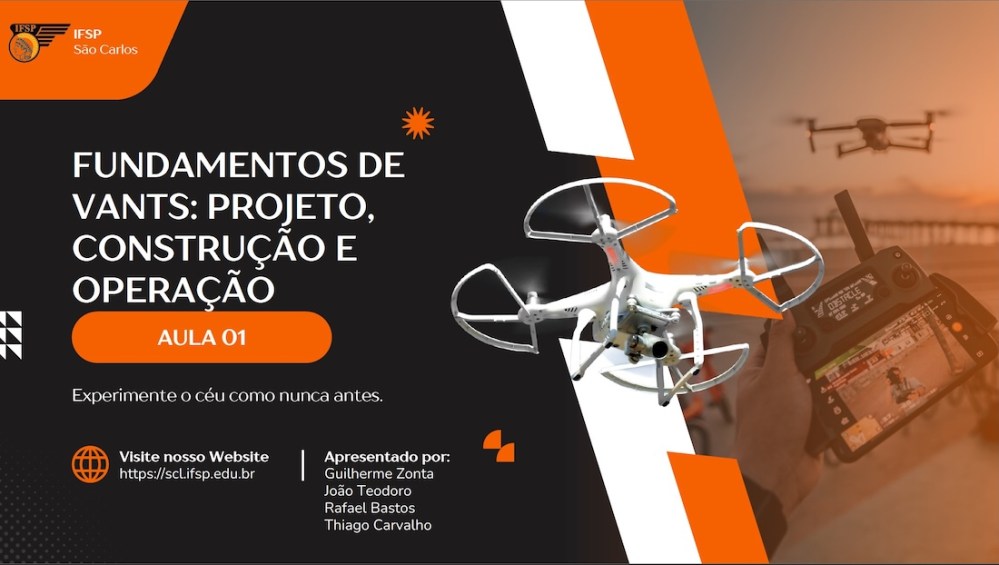
But of course there are also other schools beyond the universities. One of them is a federal technical school called IFSP São Carlos (Federal Institute in the state of São Paulo) and the city also has an educational foundation called FESC. IFSP and FESC have partnered up to offer a course named “Drones in action”, where 10 intensive classes of 2 to 3 hours each teach everything a layman needs to know about projecting, developing and deploying a drone, including not only technical details, but also legal regulations and security aspects. Right now, we are exactly in the middle of this course and I must say that it really has broadened my mind immensely. Here is an illustration from the course material:
This is the title page of the first class in the series about Drones in action: project, development and deployment. The course is presented by four enthusiastic persons (Guilherme Zonta, João Teodoro, Rafael Bastos, and Thiago Carvalho) from Instituto Federal de São Paulo in São Carlos, and is coordinated by Rogéria Kapp from Fundação Educacional São Carlos.
I got interested about finding out more on the subject and was lucky to retrieve an article from Nature in 2015, where the researches discuss how insects can fly and inspire developers of drones in their quest for light-weight, yet fast and powerful drones. I urge you to read the article which also gives very basic facts about why objects can fly. See reference #2 below.
Update 348’2025 (2025-12-14)
On 338’2025 (2025-12-04) was held the last class in the series Drones in action: project, development and deployment, with practical experience on how to navigate a drone. Today, I also obtained an e-book presenting a summary of the course, you can find it in reference #3, below.
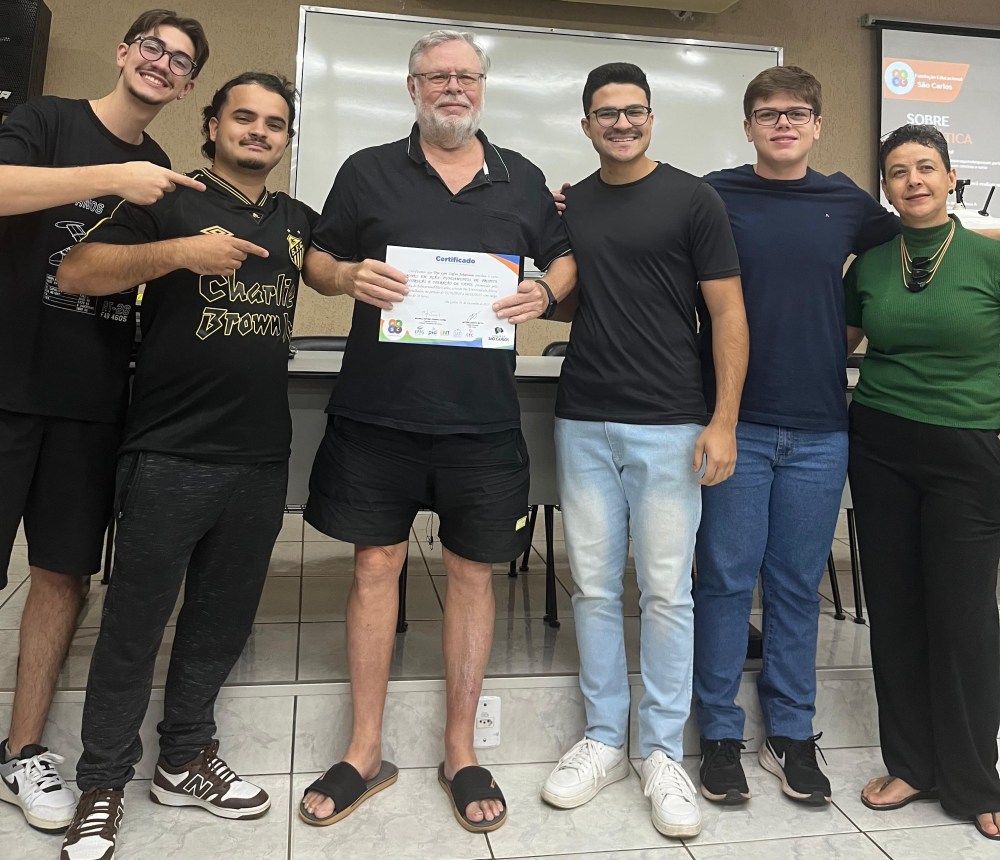
And since I had participated in all activitities from the start, I also obtained a certificate for that, see the following photo:
Here you can see a photo taken on 338’2025 (2025-12-04) of me (guess who?) in the center with the following persons, from left to right: Thiago Carvalho Nogueira, Rafael Bastos Arantes, João Pedro Teodoro Batista , Guilherme Leonel Zonta Avi, and Rogéria Kapp.
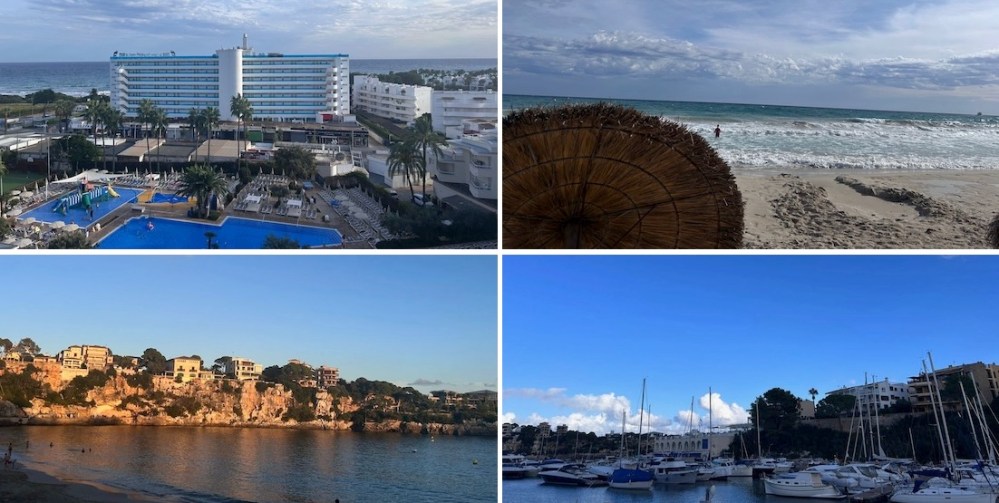
Today’s header photo and also the following ones were taken by my friend Juliane Vianna who recently had some marvellous days on the Spanish island of Mallorca. More about Mallorca can be found in reference # 4 below.
Pictures from Sa Coma and Porto Cristo on the Spanish island of Mallorca. Photos taken by Juliane Vianna on 303’2025 (2025-10-30).
Nikola Tesla would be extremely proud if he knew what the current scientists are on the way to realize. Once of his projects dealt with transmitting electric energy wirelessly over a distance.
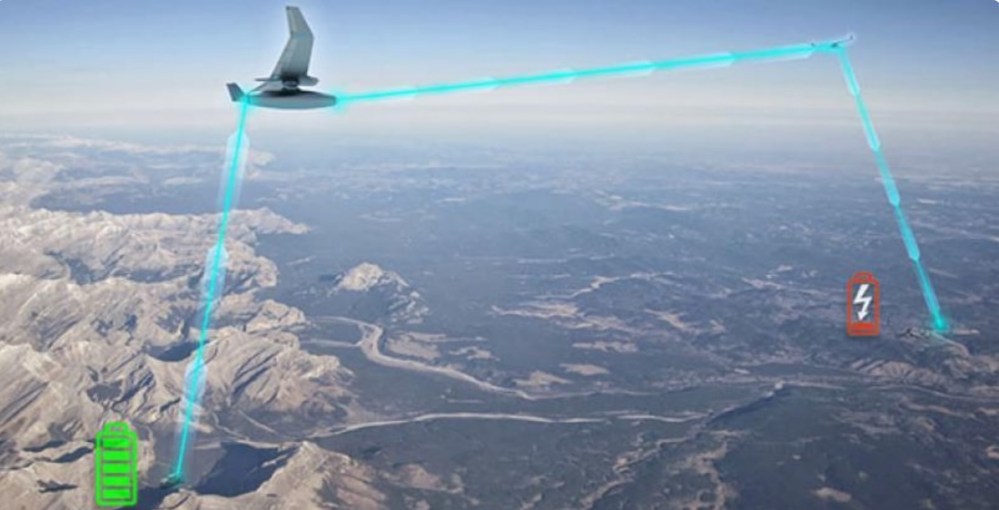
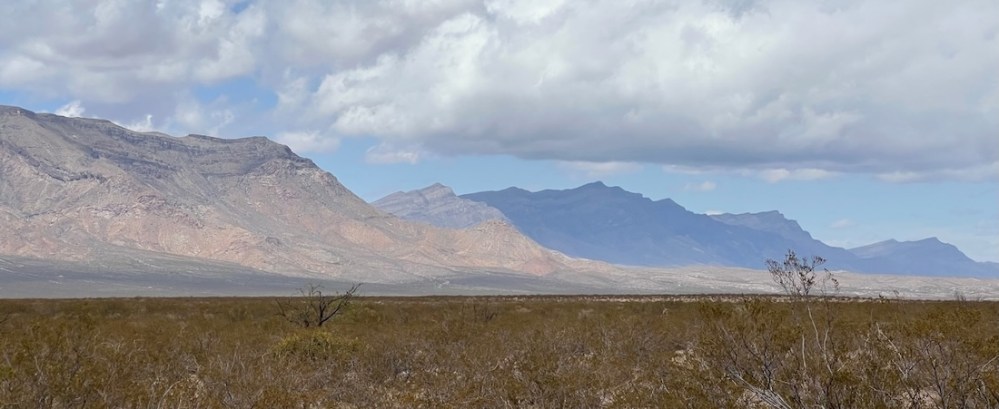
The US projects agency DARPA, well known among other things for creating the first steps of the internet and automatic vehicle guidance systems, recently published the results of a series of tests in the U.S. Army’s White Sands Missile Range, New Mexico, USA, where their program POWER (Persistent Optical Wireless Energy Relay) set a new record for transmitting power over distance. The team recorded more than 800 W of power delivered during a 30-second transmission from a laser 8,6 km away. Over the course of the test series, more than 1 MJ of energy was transferred.
An artist’s view of how electrical energy could be relayed from a source to the necessary area by way of aircraft.A photo taken at the test site the day that the record was obtained.
More about Nikola Tesla and the DARPA program can be found in References #1 and #2 below.
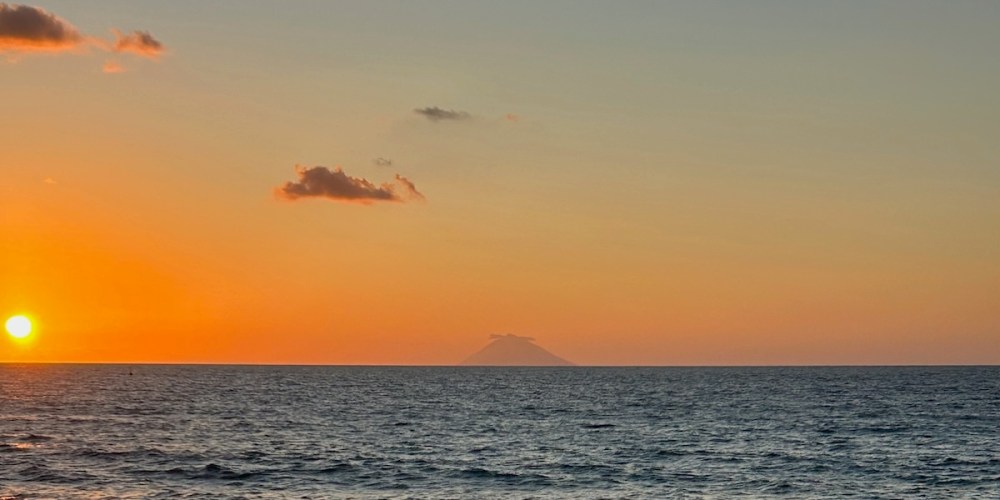
The following photos were taken by a faithful follower of my blog, who recently visited the South of Italy. From Cabo do Vaticano, he had a breathtaking view of the island of Stromboli with its still active volcano. Thank you, my friend, for your continued support of my blog!
More about Stromboli can be found in Reference #3 below.
The sun setting on the Mediterranean Sea with the Stromboli volcano shown in the horizon. Photo taken on 257’2025 (2025-09-14).The sun has already set on the Mediterranean Sea with the Stromboli volcano shown in the horizon. Photo taken on 257’2025 (2025-09-14).
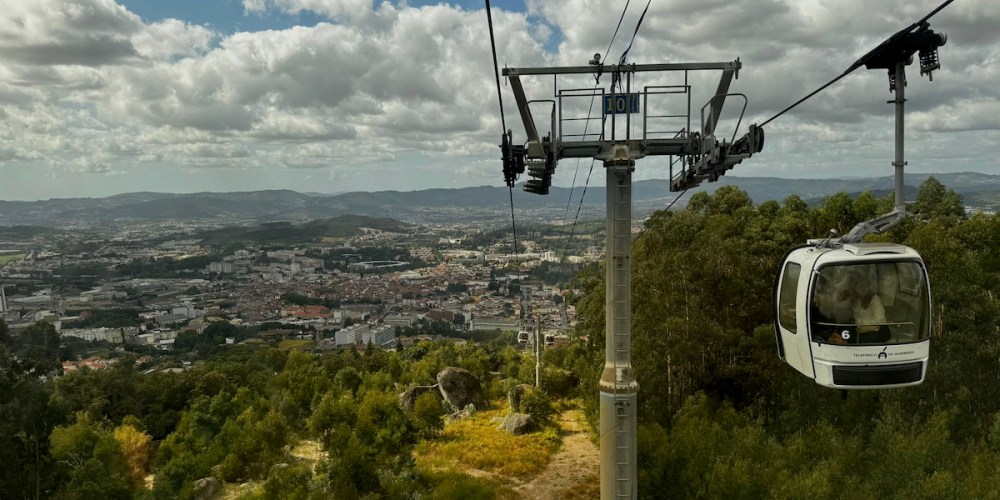
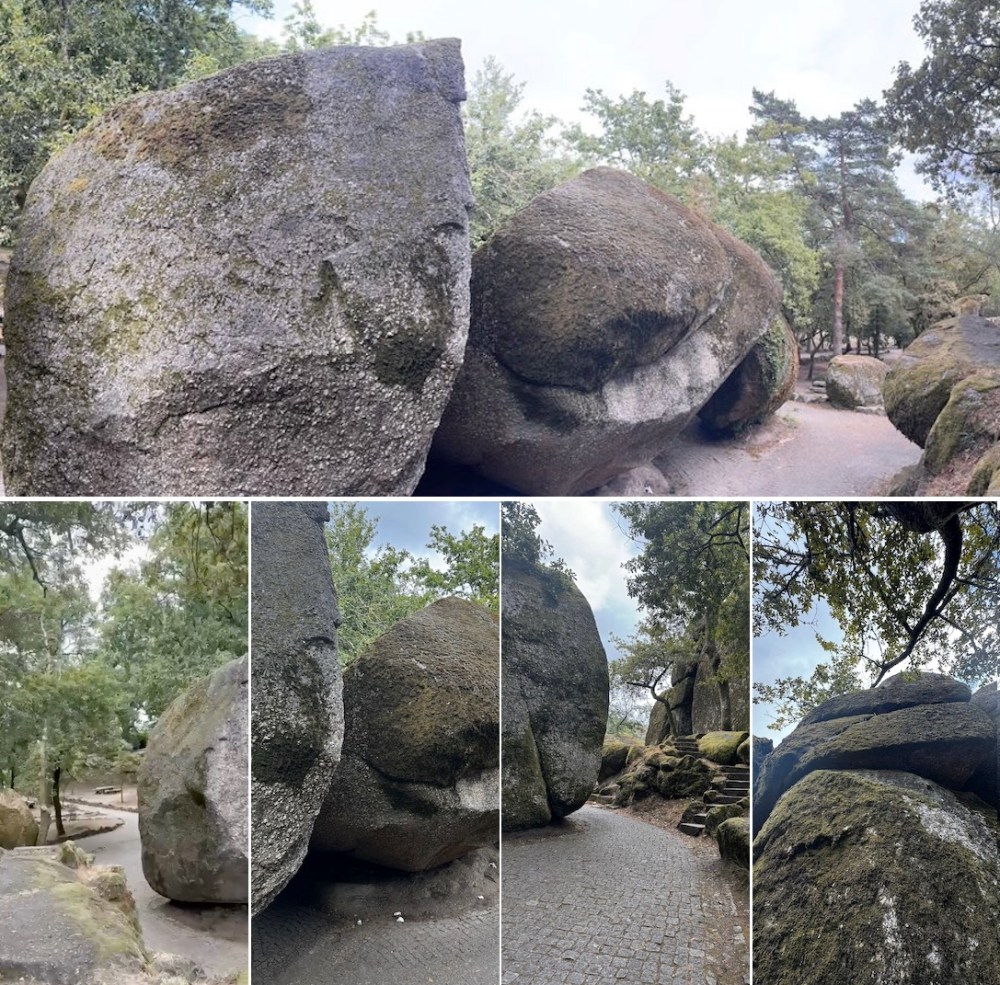
Following my story from last month’s blog, here is yet another interesting place on this earth. This time we have moved eastwords into the Old World, specifically the birthplace of Portugal, named Guimarães. It is located in a mountainous region in the North, not very far from the cities of Braga and Porto. Reference #1 tells you more about Guimarães and its region.
The following photos were taken by my friend Dina Giltinan, who varies living with her family in Guimarães and Limerick, Republic of Ireland. Thank you Dina for yet another contribution!
Cable car in the região of Guimarães, North of Portugal, going from the city up into the mountians. Photo taken by Dina Giltinan in August, 2025.Forest with granite rocks in the region of Guimarães, North of Portugal. Photos taken by Dina Giltinan in August, 2025.
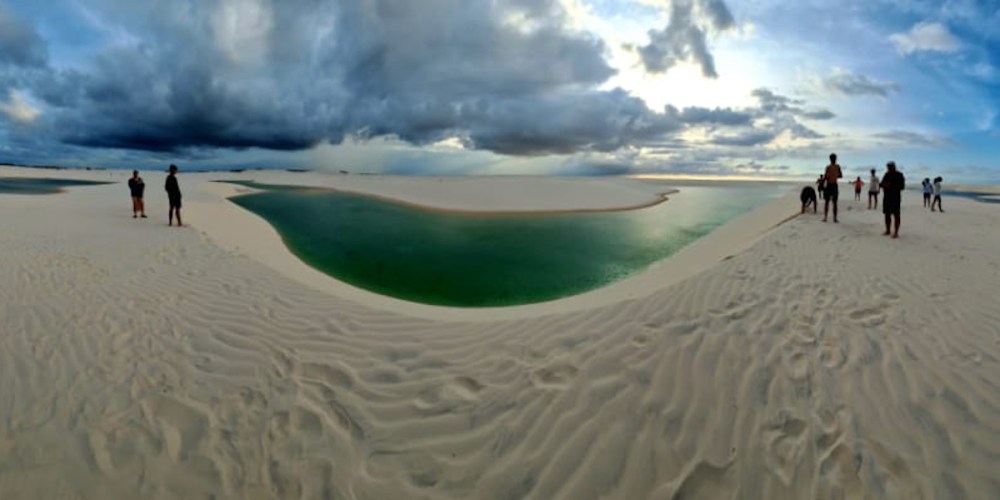
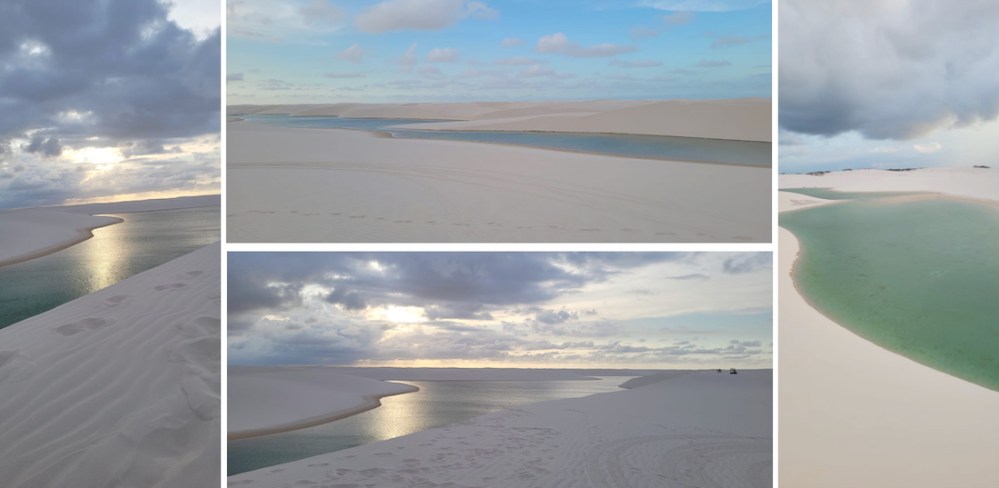
There are so many beautiful places around the world and this month I will show you yet another one. It is a national park located in the state of Maranhão, on the Northeast coast of Brazil, called Parque Nacional dos Lençois Maranhenses. It has a 70 km coastline, and an interior composed of rolling sand dunes. In July 2024 the site was declared a UNESCO World Heritage Site a for its exceptional beauty and the fact that it is a unique natural aspect in the world.
Below are some photos from there. I wish to thank my neighbors, Cloves and Luzimar Bianco, for taking the time to shoot these marvellous pictures. More about this esquisite place can be found in Reference #1 below.
Photos from Parque Nacional dos Lençois Maranhenses, taken on 187’2025 (2025-07-06) by Cloves and Luzimar Bianco
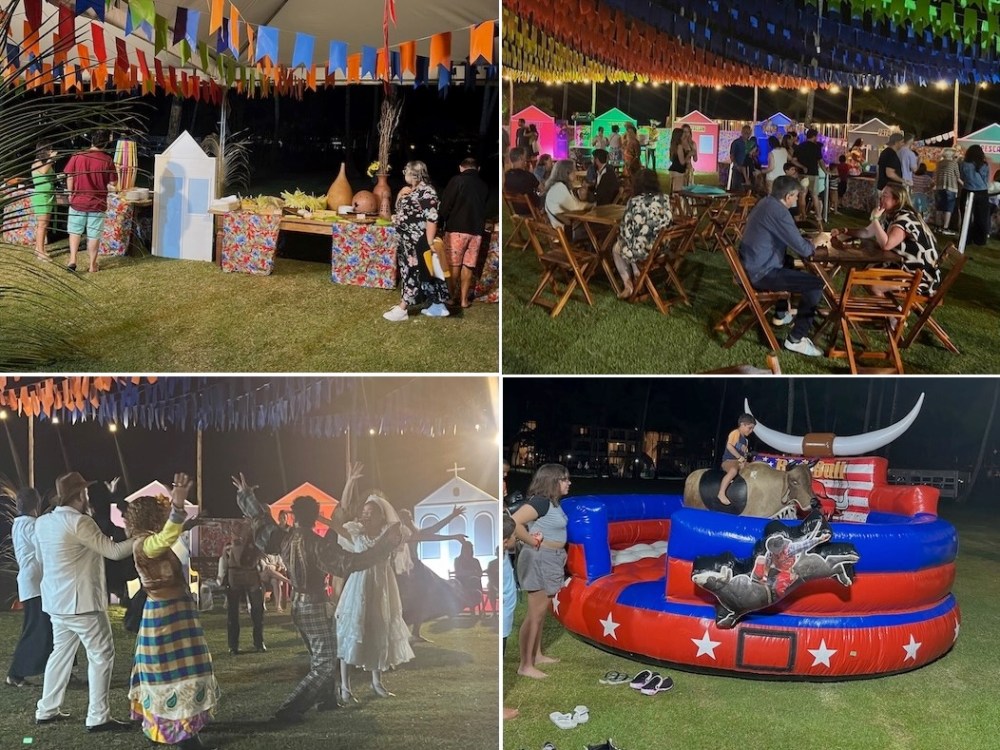
June is normally considered as a summer month on the Northern hemisphere, meaning that the Southern hemisphere is starting to experience winter. And, of course, the farther away one gets from the equator, the more extreme the weather conditions normally get. One such interesting phenomenon is the Midnight sun, when the sun never sets during at least two weeks. Therefore, it is it understandable that those who live in the priviledged areas want to celebrate the occasion. From my own experience I remember the light summer nights in June in Sweden, peaked around the Summer solstice, with its wonderful parties. But also on more Southern latitudes in Europe, there are great celebrations during the summer season. An example of that is Portugal, where the festas juninas (June parties) are being held in many places. And since Portugal dominated Brazil during more than 300 years, those parties were introduced also in Brazil and are still prevalent during the month of June, even though the meteorogical conditions may be more adverse. My girlfriend and I had the pleasure of participating in a really animated festa junina on 170’2025 (2025-06-19) as part of the activities at a fabulous resort in Comandatuba, state of Bahia, Brazil. Today’s header photo was taken at the resort. Here are also some photos and a video clip, with the typical music style called forró, from the festa junina. See also reference #1 (in Portuguese) below.
Pictures taken at the Festa junina at Transamerica in Comandatuba on 169’2025 (2025-06-19), showing a typical “arraial” with food, drinks, theater performance and even an attraction where the corageous young and old could try to master the mechanical bull.
Music in the forró style, very common in the Northeast of Brazil, played by a local band at the festa junina.
Finally, you may have enjoyed the FIFA Club World Cup in football that is being played in various venues in the USA. Earlier this month was reported FIFA had made a change in the rules for offside, thanks to an observation from a small Swedish club, Torns IF, in 2023. See reference #2 below for more information.
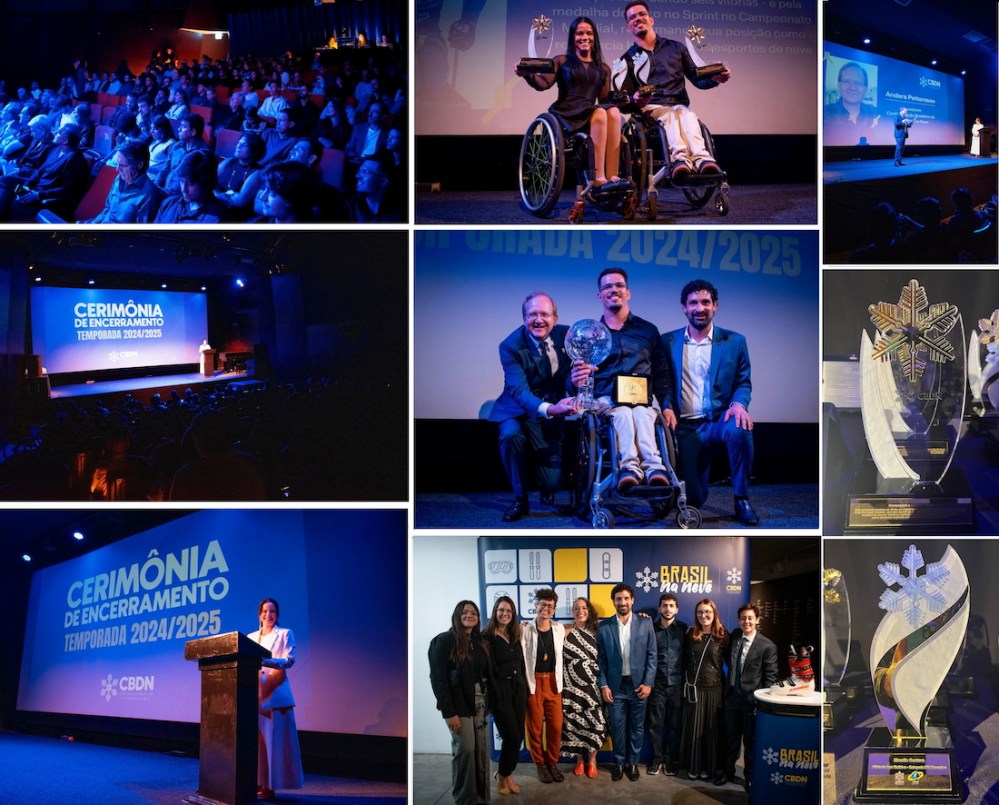
On 146’2025 (2025-05-26), I was invited to a ceremony to mark the conclusion of the 2024/25 winter sport season. It was held in São Paulo at MIS, the museum for image and sound. The whole event was very well organized, with both an initial cocktail with delicious salty and sweet snacks and a bigger buffet during the half-time break.
It was really interesting to see the enthuiasm of so many talented athletes, both those with normal body conditions and those who participate in the para athletic disciplines. And the ceremony, which meant to reward the best of those, was also very well planned and executed, with a ceremony master, Beth Romero, who is a well-known sports journalist. A video from the ceremony can be found in reference #1 below, and here are also some photos:
As you can see from the photo in the upper left corner, the auditorium was packed with expectation from the athletes, their families, friends and supporters. The bottom photo in the left column shows the ceremony master, Beth Romero. The three photos in the middle column show, from top to bottom: – Two of the most rewarded athletes, Aline Rocha and Cristian Ribera, both world champions in para ski cross country; – Cristian Ribera, showing the Crystal Globe as World Cup champion, rewarded as Athlete of the Season, flanked by CBDN President Anders Pettersson and COO Gustavo Haidar; – Some of the CBDN staff present during the ceremony, from left to right: Laura Dias, Luisa Crisol, Luíza Calaça, Thatiana Freire, Gustavo Haidar, Matheus Sales, Laura Costa, and Rafaella Malafaia. In the rightmost column, from top to bottom: – CBDN President Anders Pettersson welcoming the audience to the cremony; – The trophy awarded to the Athletes of the Year in their respective disciplines; – The trophy awarded to the Athletes considered Revelations or Highlights during the Year.
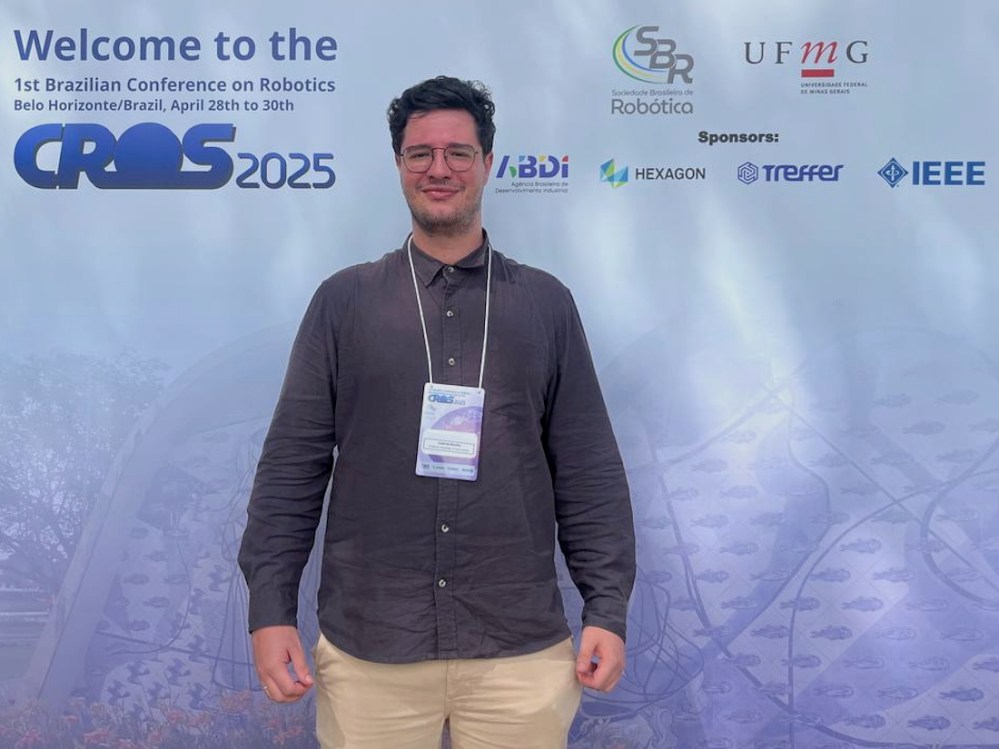
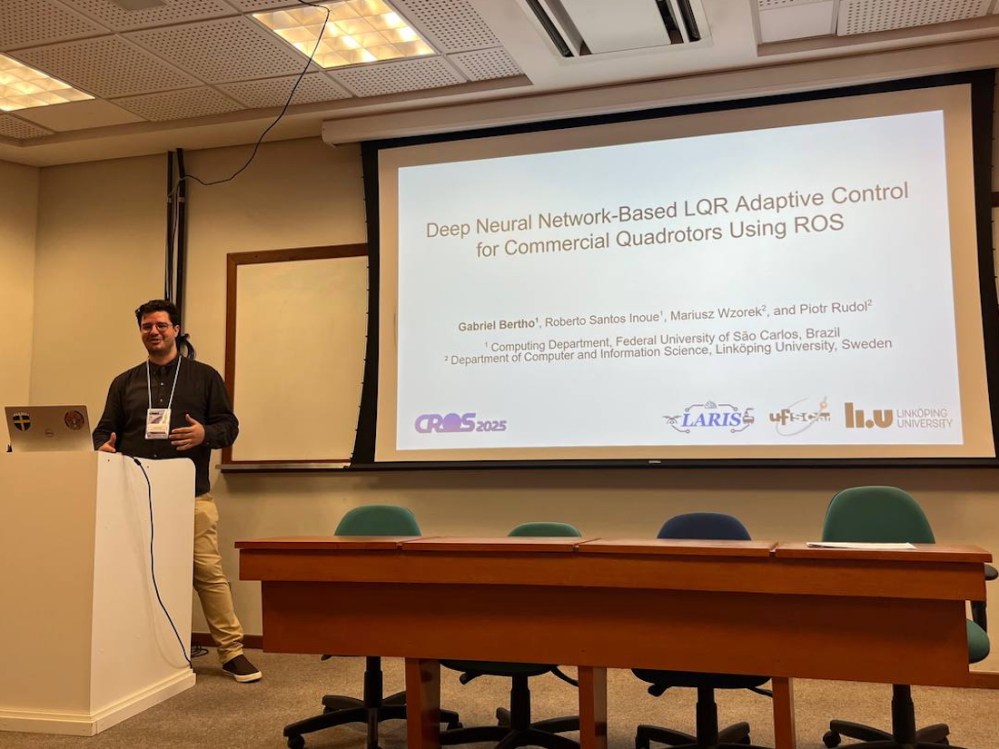
Another highlight this month is related to my student of the Swedish language, Gabriel Bertho. I teach him Swedish so he can communicate well with his fellow colleagues at Linköping University of Technology. Gabriel, who is a technology student at UFSCar, the Federal University of São Carlos, spent four months in Sweden in 2024 on a robotics project. The result of that project was presented by him at the 1st Brazilian Conference on Robotics in Belo Horizonte, MG, Brazil during the last three days of April, 2025. Here are two pictures of Gabriel and his presentation at the conference:
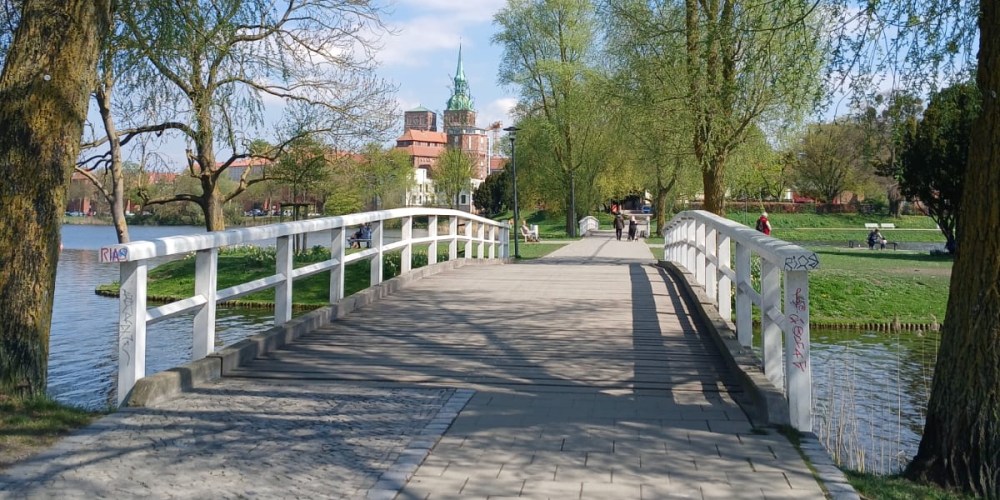
Finally, this month’s header photo was taken by another of my Swedish language students, Laura Ponce, who currently lives in Greifswald, Germany, where she took this springlike photo on 121’2025 (2025-05-01).
A beautiful spring photo taken on 121’2025 (2025-05-01) in Greifswald, Germany by Laura Ponce.
Thank you, Laura! More about Greifswald can be found in reference #2 below.
There are so many interesting events organized in the world today, be it sports, cultural, religious, political etc. And although many of those can be watched on a distance, via internet, there is a special feeling being on the venue personally.
But, in order to not only make the event something to be remembered for a long time by the spectators, we also need to have a good solution to turn the venue into a reusable place for so many different activities. Of course, it is desirable that the arena has the possibility of a rectractable roof, so that it may be used under the best possible weather conditions all year round. But, what if you want to combine a superb lawn surface for an exciting football game, a popular consert and also permit icehockey games with a perfect ice rink?
I think that the German city of Gelsenkirchen has come up with a very appealing solution. Their own football team, Schalke 04, is currently playing in the second division of the German championships, Bundesliga, after having been relegated from the first division two years ago. The icehockey team, EHC Gelsenkirchen, plays in a minor league in the German championships, using a dedicated arena, but what if it manages to be promoted to the first division and needs to host games with a much larger audience?
The solution is called Veltins-Arena, a multipurpose arena built in 2001 and that has lent its name to the neigboring brewery since 2005. The arena has hosted significant events, including the 2004 UEFA Champions League final, five matches at the 2006 FIFA World Cup including a quarter-final, and the 2010 Ice Hockey World Championship. It has also been the venue for concerts and other sports events such as the German Speedway Grand Prix and the 2018 German Darts Masters. The arena has hosted concerts by major artists and bands, including The Rolling Stones, Bruce Springsteen, Bon Jovi, Metallica, AC/DC, Taylor Swift and Rammstein.
But what makes the Veltins-Arena so adequate for holding such a variety of events? Besides the retractable roof I mentioned above, it is possible to slide out the whole central part of the stadium. That way, it is e.g. possible to guarantee that the grass lawn gets the right conditions to recover for an import football game after a sold-out rock consert. Today´s header photo shows the lawn being rolled into place, which takes 4 hours. More about Veltins-Arena can be found in References # 1 and 2 below.
There are so many interesting places around the world and of course it is impossible to travel to all of them. Instead, how good it is to know that we have friends who can supply us with the information and photos we lack.
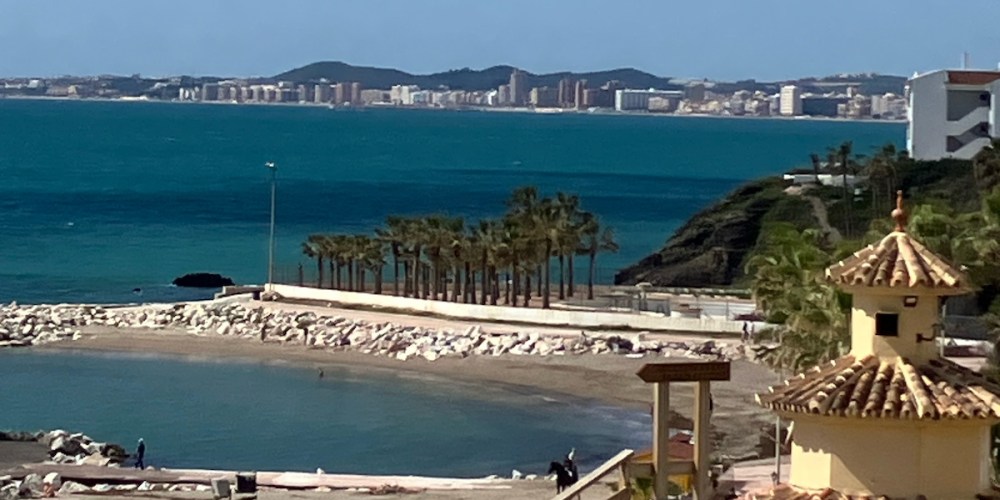
This photo today was taken by my friend Barbara a couple of weeks ago. She was on vacation in Málaga, Costa del Sol in the South of Spain, by the tempting Mediterranean sea. Thank you, Barbara, for sharing this view with us.
A beautiful view of the beach in Malaga, Costa del Sol in the South of Spain. Picture taken by Barbara Sigurdsson in March, 2025.
Málaga is a city which a rich history, founded 770 BC. More information can be found in reference #1 below.
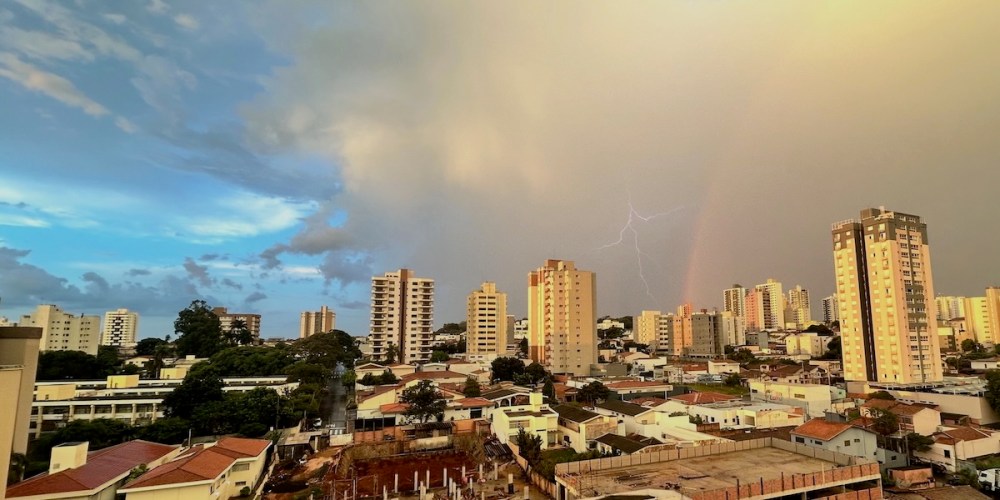
They are simply amazing, the things invented by Mother Nature. The following photo shows a view of the sky in São Carlos, SP, Brazil, taken exactly one week ago, in the late afternoon of 51’2025 (2025-02-20) by my daughter Karina. Such a view is something to be seen maybe only once in a lifetime! She was able to capture a bright sky, rainy sky, lightning (of course, being the day of the Nordic thunder god Thor), and rainbow, all-in-one!
This amazing photo was taken by my daughter Karina in the very late afternoon of 51’2025 (2025-02-20) in São Carlos, SP, Brazil. She was able to capture clear sky, rainy sky, lightning and rainbow all-in-one.
But Mother Nature can also play tricks with us from time to time. One deficiency that is more common in men than women is color blindness, also known as color vision deficiency or daltonism. The last term is derived from the English chemist John Dalton, who during the 18th century made the first scientific observations about color blindness. See also reference #1 below.
Dalton suffered from red-green dichromacy. If there had been traffic lights when he lived, then he would have had difficulties in distinguishing the red “stop” signal from the green “go” signal. For that reason, often the green light has a bluish hue to reduce the risk of such a confusion. Furthermore, there is a suggestion to extend the normal three-stage traffic lights from the current red, yellow and green colors to also include a fourth one with white light. That would make it easier is for autonomous vehicles approaching a traffic signal. If it shines white, then it means the same as the green light, go ahead, otherwise don’t. See also reference #2 below.
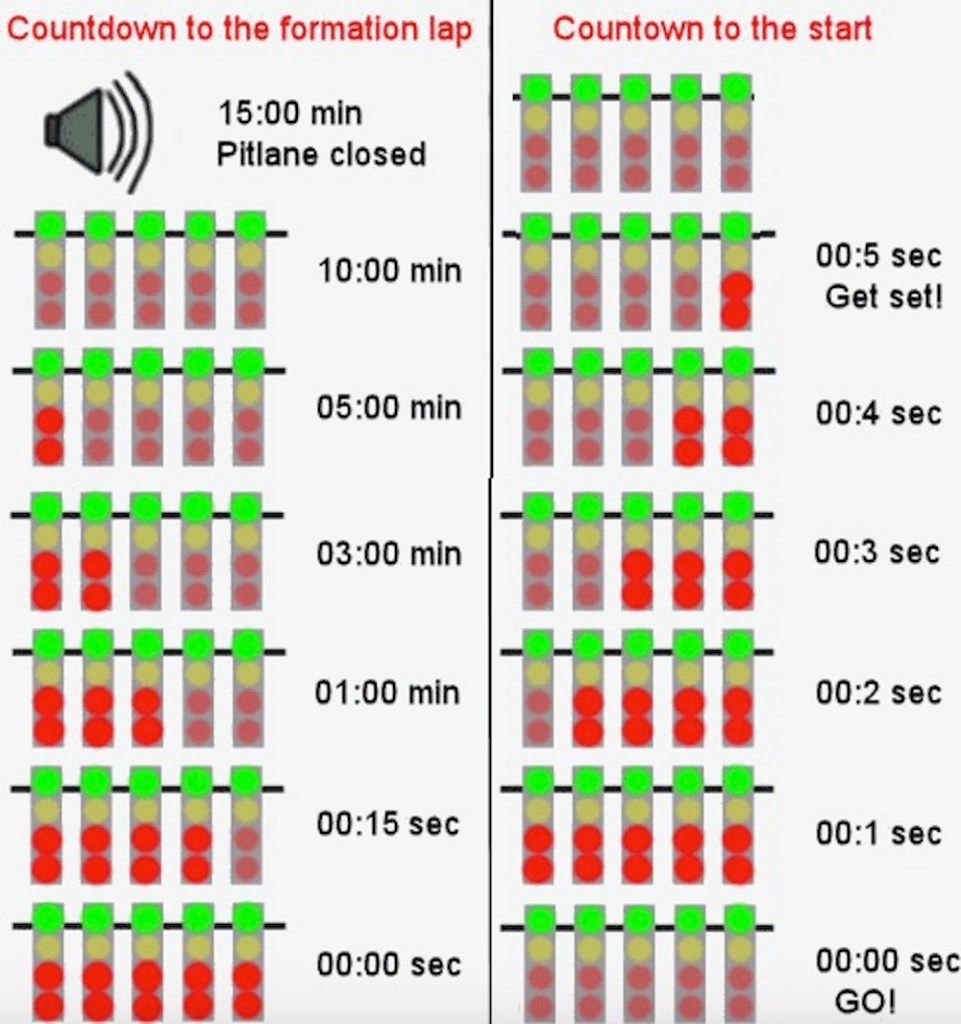
But traffic lights are not only consisting of various colors, there are also different ways to arrange them, further to the traditional top-down placement of red-yellow-green, that make them more intuitive to understand. One such arrangement is being used in the start of a Formula 1 race:
Maybe it was Formula 1 that inspired the inventor of this traffic light:
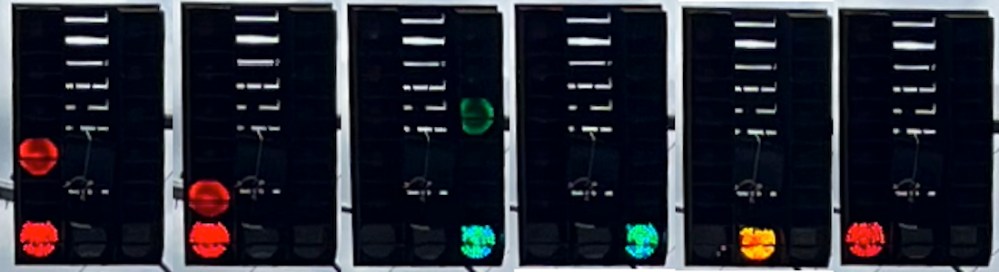
Here is an abbreviated sequence of the various colors of a traffic light placed in the intersection of Avenida Francisco Pereira Lopes and Rua Ângelo Passeri in São Carlos, SP, Brazil. Pictures taken on 56’2025 (2025-02-25).
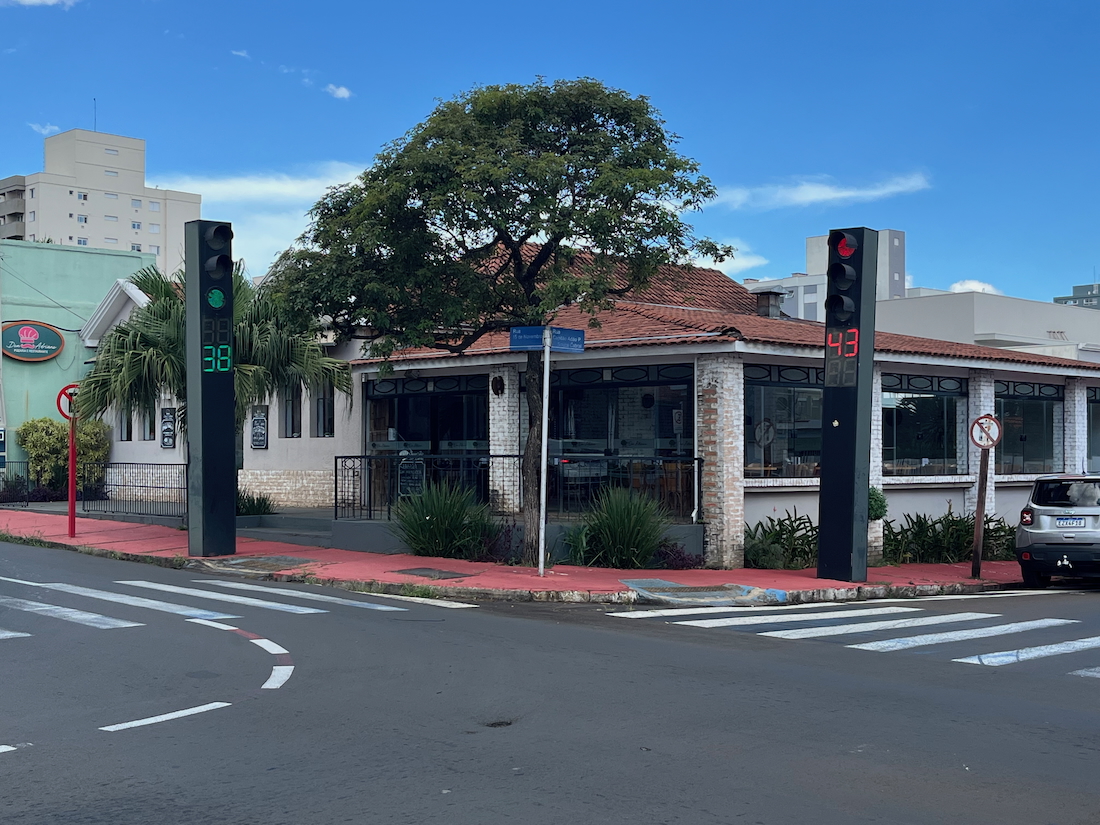
But the most intuitive traffic sign is no doubt this one, where both the driver having the liberty to proceed (another 38 seconds in this example) and the one waiting for their turn to go ahead (after 43 seconds in this example) have an exact idea of the respective available times:
Another intersection in São Carlos, SP, Brazil (Rua 15 de Novembro and Rua Capitão Adão Pereira de Souza Cabral), where both the driver allowed to proceed and the one having to wait know about their respective times. Photo taken on 56’2025 (2025-02-26).

 What did you learn in School today?